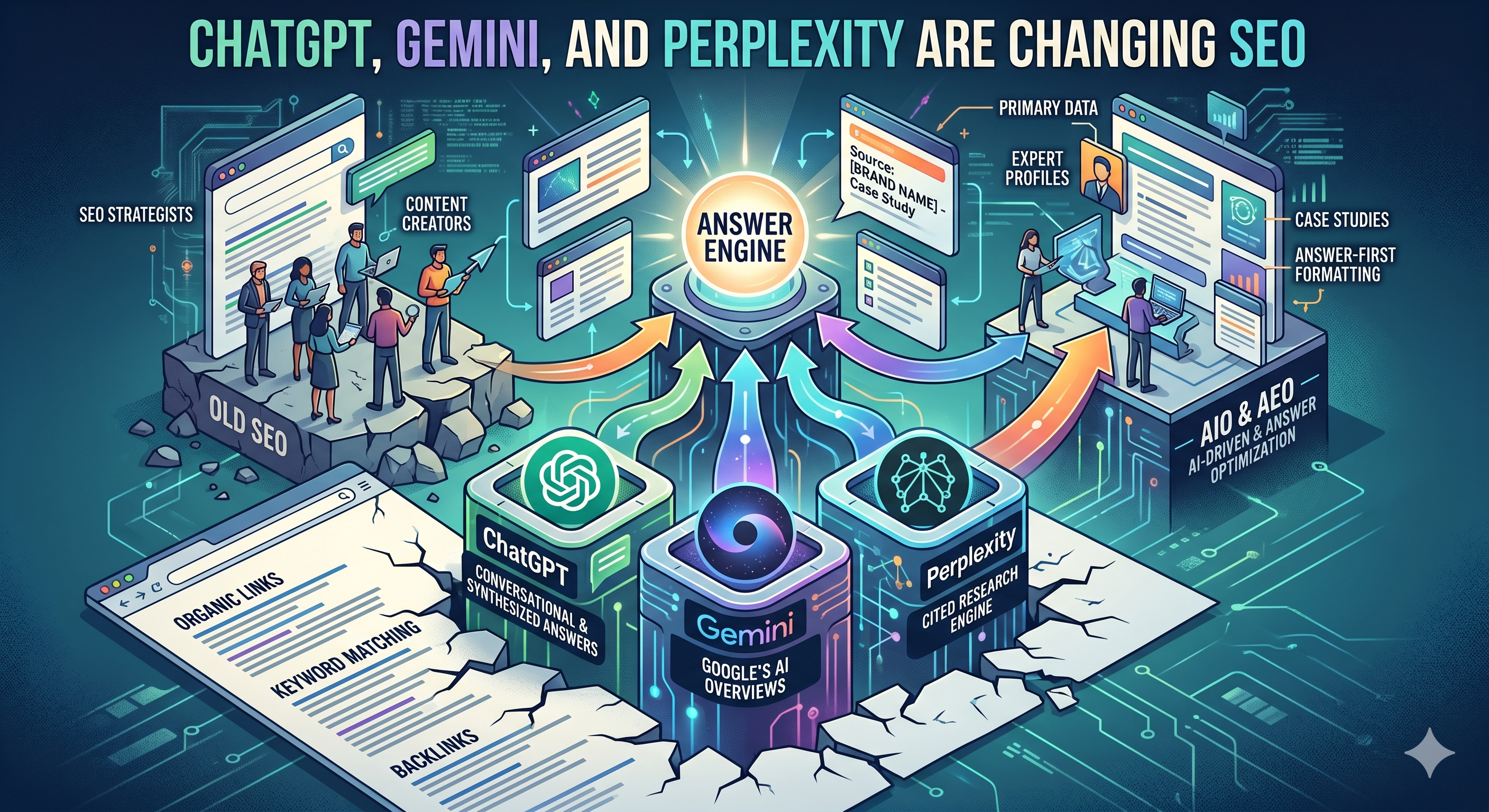
How ChatGPT, Gemini, and Perplexity Are Changing SEO in 2026
It’s wild how much search habits have shifted in just a few years. Not long ago, most people headed straight to Google, typed in a query, and sifted through a list of blue links through SEO. Now, tools like ChatGPT, Gemini, and Perplexity have turned everything upside down. More and more, people just ask a question and get an instant, AI-generated answer—no website-hopping needed.
This is a huge deal for any business that gets customers online. Direct answers from AI are shaking up search, and whether you like it or not, you can’t ignore it. If you want people to find you, you really need to understand how AI Search Optimization works. It’s not just a “nice-to-have.” It’s at the core of how digital marketing operates in 2026.
So, let’s dig into how these new AI search engines are changing the SEO rules—and what you can do about it.
AI Search Engines: What’s New?
Traditional search engines just lined up websites based on keywords and ranking factors. You clicked around, read snippets, and (maybe) found an answer after a few tries.
But AI-powered platforms do things differently. ChatGPT, Gemini, and Perplexity scan huge amounts of info and spit out direct responses to questions—sometimes in seconds.
Instead of searching “Best SEO strategy for small businesses,” people now type, “What’s the best SEO strategy for a small business with a tight marketing budget?” The AI gets right to the answer. No endless clicking. No digging.
That’s forcing everyone in SEO to change the way they think about visibility.
ChatGPT: Making SEO More Conversational
ChatGPT is where people go if they want straightforward explanations or quick help. There’s less hunting for dozens of blog posts. For website owners, this means you can’t just write fluffy content. You need to answer real questions clearly and directly.
If you’re building helpful, well-organized resources, you stand a better shot of being mentioned in AI responses. And because users talk to ChatGPT like they're talking to an expert, content has to feel human. Forget about basic keyword lists—focus on what people are actually asking and how they naturally speak.
Gemini: Search With Context
Gemini is now baked right into Google’s ecosystem. Instead of throwing a list of links at you, Google’s often serving up smart summaries built by AI. It saves time but raises the bar: if you want to appear anywhere, you need to be a trusted, credible source.
Gemini’s all about quality. It puts weight on expertise, relevance, and trustworthiness. Publish content that’s genuinely helpful, reliable, and easy to follow—or someone else will show up instead.
Perplexity: Source Matters
Perplexity works differently from others. It actually cites where its answers are coming from, which is a huge deal. If your content is solid and authoritative, there’s a real chance you’ll be named as a source—sometimes even if you’re not topping the search results in the old way.
Building authority is now non-negotiable. Instead of just chasing rankings, businesses have to show real expertise, so AI platforms recognize and cite them.
Why “Old” SEO Isn’t Enough
SEO isn’t dead, but it’s definitely evolving. Traditional SEO, AI Search Optimization, Answer Engine Optimization—they all matter. You need to think about things like semantic search (making your content make sense to AI) and entity SEO (being the go-to expert in your area). The companies adapting fastest are the ones winning more traffic.
What is AI Search Optimization?
AI Search Optimization is all about helping AI-driven platforms understand, trust, and reference your website. The goal isn't just to show up in search results, but to become the answer these AIs choose to share.
10 AI SEO Strategies to Stay Ahead
1. Focus on User Intent
Find out what your audience really wants and answer their questions completely.
2. Create Topic Clusters
Build content that covers all angles of a main topic, not just a bunch of isolated articles. For example: one main digital marketing page, with guides on SEO, local SEO, content marketing, and so on.
3. Use Semantic SEO
Naturally weave in related ideas and concepts so your content “makes sense” to AI engines.
4. Optimize for Questions
Structure your content to answer real questions, with headings like “What is AI Search Optimization?” or “How does ChatGPT affect SEO?”
5. Show Proof of EEAT (Experience, Expertise, Authoritativeness, Trustworthiness)
Show off credentials, case studies, or real stories. Establish trust at every turn.
6. Use Structured Data
Add schema markup—things like FAQ or local business schemas—to help AI read your pages easily.
7. Make Your Website Fast
Mobile-friendly, super responsive sites perform better, and users (plus AI engines) notice.
8. Build Brand Authority
Solid brands are more likely to get cited. Keep your website, social channels, and business profiles consistent.
9. Share Unique Insights
Don’t just repeat what’s out there. Share original data, observations, or case studies to stand out.
10. Keep Everything Fresh
Update blogs, stats, and guides. AI systems pick up on new, accurate content first.
Where SEO Is Heading
SEO isn’t just about landing at the top of search results anymore. It’s about being the answer—getting cited by AI systems, building recognized authority, and genuinely helping users.
The businesses that figure this out sooner will stay ahead. They’ll show up in more AI summaries, get more traffic, and earn more trust.
How DevTeam Digital Marketing Agency Can Help
At DevTeam Digital Marketing Agency, we help you get noticed by both search engines and AI tools. Here’s what we do:
- AI Search Optimization: We boost your odds of being featured in AI-powered results.
- SEO Strategy: We design approaches for steady, organic growth.
- Content Marketing: We create content real people and AI want to reference.
- Website Optimization: We fix technical issues and make your site faster and smoother.
- Local SEO: We help you show up in both local search and next-generation AI results.
FAQ
How is ChatGPT changing SEO?
ChatGPT pushes people to ask questions like they’re talking to a person. That means clear, direct answers matter most.
How does Gemini impact SEO?
Gemini puts emphasis on authority and expertise. Quality, not just quantity, wins the day.
What’s different about Perplexity?
Perplexity actually cites its sources—authoritative content gets noticed.
Is traditional SEO still important?
Yes, but it’s just the start. You also need AI Search Optimization and Answer Engine Optimization.
What is AI Search Optimization?
It’s the practice of making your site the trusted source for AI-driven search and answer platforms.
Conclusion
AI tools like ChatGPT, Gemini, and Perplexity are flipping search upside down. If you want to keep getting found, you need to change how you think about SEO—focus on authority, trust, helpfulness, and making your content the best answer out there.
Successful businesses in 2026 won’t just chase rankings. They’ll build expertise, answer real user questions, and get chosen by AI—even when there’s no “top of page one.” If you haven’t started optimizing for this new era, now’s the time. Optimization?
AI Search Optimization means shaping your site and content so that AI tools instantly “get it.” They can trust your info, use it in their answers, and point users to you—not just your competitors.
In other words, you’re not just trying to win links in Google anymore. You want to show up in the answers AI tools create for people.
ChatGPT, Gemini, and Perplexity are changing how people find information. As AI-generated answers become the norm, businesses can’t just chase top rankings—they need to focus on real authority, clear answers, and trustworthy, user-focused content.
To stay competitive in 2026 and beyond, you have to start thinking about AI Search Optimization now. The sooner you shift, the stronger your spot in this new search landscape.